The San Ysidro McDonald’s Massacre: a Visit and a Remembrance
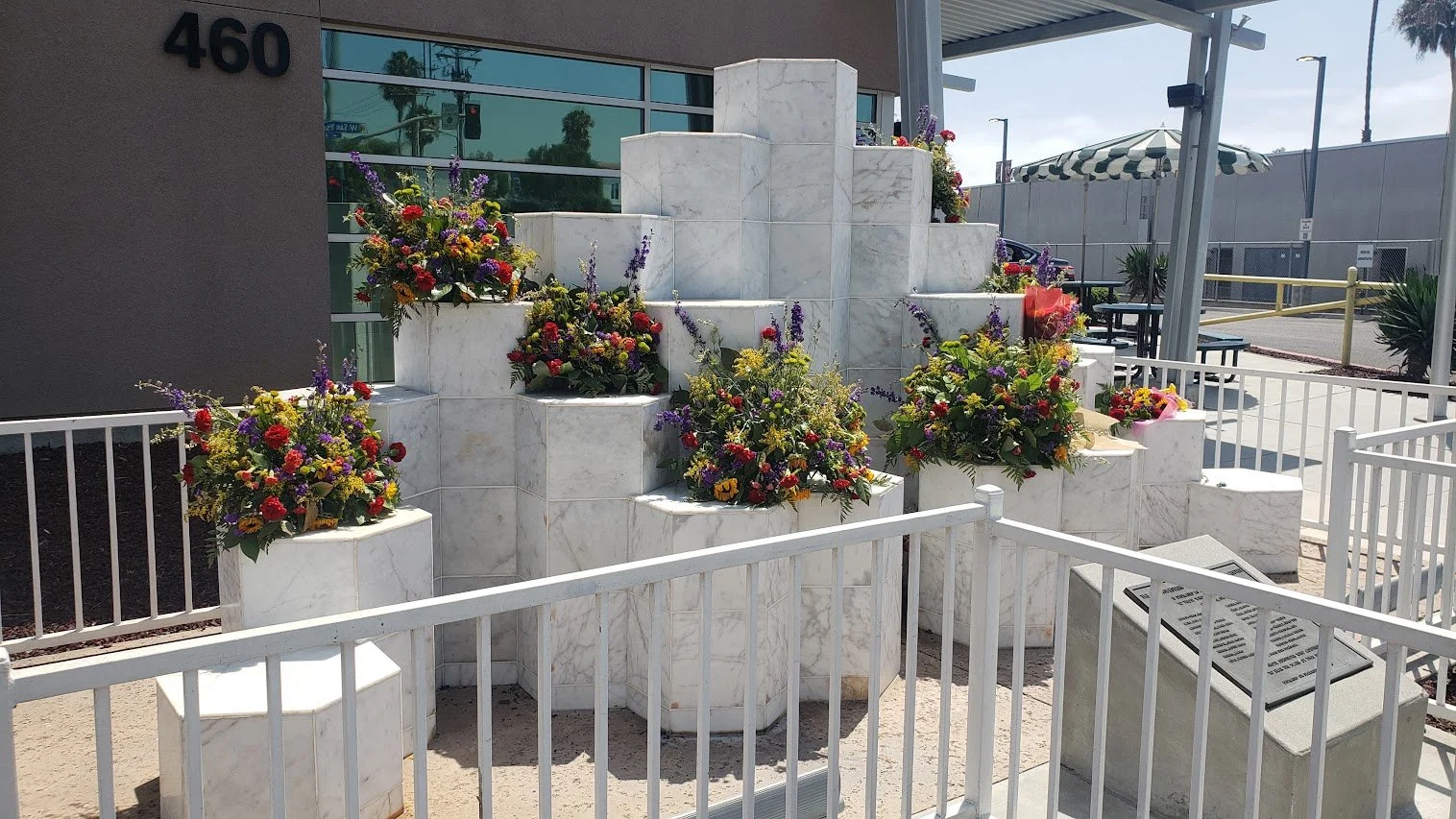
San Ysidro McDonald’s Massacre Memorial Photo by Dan Grossman
On July 18, 1984, as I was frying burgers in a McDonald’s in Indianapolis, James Huberty visited the San Diego Zoo with his wife and children.
Afterward, he took them to a McDonald’s in nearby Clairemont. During the course of the day, he told his wife that his life was effectively over and that he would be “going hunting… hunting for humans.” Then he left for another McDonald’s.
This other location was in the southernmost district of San Diego, San Ysidro—where he lived with his family—adjacent to the US-Mexico border.
At 3:56 p.m., he walked into the restaurant armed with a 9mm Browning pistol, a 9mm Uzi carbine, and a 12-gauge Winchester shotgun.
Huberty began murdering customers and employees alike. He moved through the building methodically, reloading multiple times and firing more than 250 rounds. During the 77-minute siege, he killed 21 people, fatally wounded a pregnant woman whose unborn child also died, and injured 19. The oldest victim was 74 years old.
At 5:17 p.m., a police sniper shot him dead through the restaurant’s front window, ending what was then the deadliest mass shooting by a lone gunman in US history.
***
On July 18, 2026, the massacre’s 42nd anniversary, I visited the memorial site, parking at the San Ysidro Post Office next door.
The McDonald’s is gone, replaced by Southeastern College’s Higher Education Center. The restaurant was demolished shortly after the massacre and never reopened. The corporation later donated the land to the City of San Diego, and the college was built on the site in 1988. In 1990, a memorial was unveiled in front of the Education Center. It consists of 21 hexagonal marble pillars, ranging in height from one to six feet, each representing one of the victims. A plaque in front lists their names. Fresh vases of flowers rested on the pillars.
In the days and weeks after the shooting, I wondered what I would have done if a gunman had started shooting in McDonalds where I worked. In the years since, I’ve periodically thought back to the massacre, even as it has been dwarfed by larger shootings.
Lately, the site has become a subject for my photography.
It was a Saturday, so no students were coming in and out of the small campus as I started taking my panoramic photos of the massacre memorial. But I was not alone. A woman in a pattern dress, with a plastic gallon jug of water, was sitting on a picnic bench.
I went up to talk to her.
She told me her name was Maria Flores, the mother of David Flores Delgado, who was shot dead just outside the restaurant, having come to the McDonalds by bicycle to get ice cream with friends. One of those friends, Omar Hernandez, was killed by Huberty, but another friend, Joshua Coleman, survived by playing dead.
“It took a while to decide what to do with this place,” Flores told me, when I mentioned that it seemed like a good thing that the McDonald’s was replaced by a college. She told me she came to the site periodically, to remember her son.
I sensed that she wanted to be alone, so I left her and continued. I took photos, not only of the memorial and the higher education center, but of the post office, the west wall of which still bears visible bullet holes from the shooting.
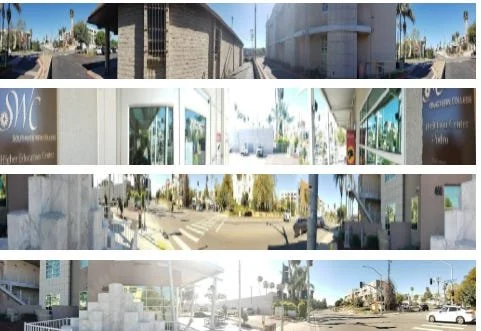
Panoramic images of memorial site by Dan Grossman in July, 2025
After a while, Ms. Flores left the picnic bench and returned to her vehicle, which was parked in the Higher Education Center’s parking lot.
It wasn’t long before a young man in a Padres ballcap came by on a bike that had been built generations before electric bikes were a thing. I approached him and said hello. After a moment, it was clear that he spoke only Spanish. My Spanish is poor, but I was able to learn that he lived in Chula Vista, just north of San Ysidro. He was looking for a job, he told me, but he needed paperwork, but not having much luck because they cost money. He was from Tijuana, but he had been in the US for several months, but I wasn’t able to find out more about his legal situation which, I suspected, likely made him vulnerable to ICE or Border Patrol detainment.
***
Looking at the names of the victims on the bronze placard in front of the memorial, you see that all the victims’ names are Hispanic in origin.
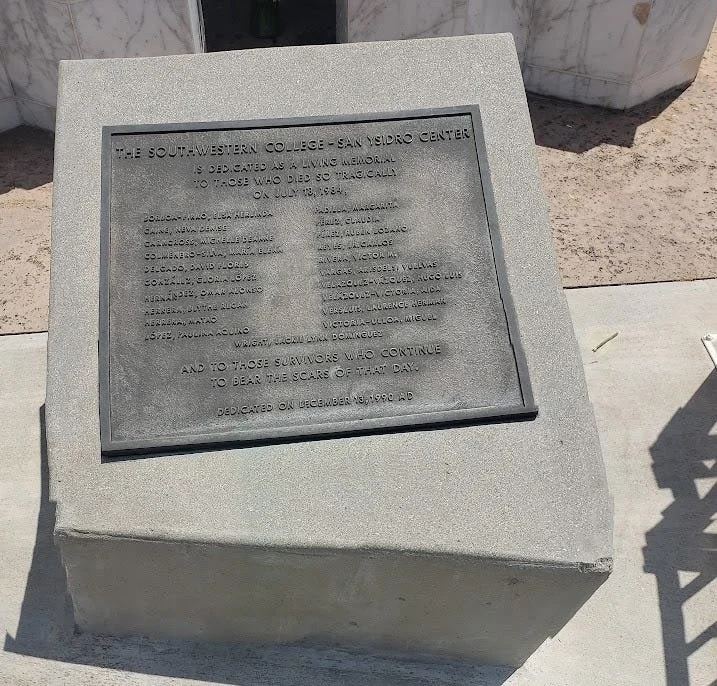
Memorial placard Photo by Dan Grossman
Whether this mattered to Huberty is not known. But after moving from Massillon, Ohio—where he had once worked as a funeral embalmer—to the San Diego area with his family in 1983, he must have been aware of the complexion of the community around him. He also spent a brief period living in Tijuana amid financial and personal hardship.
You cannot not be aware of Tijuana in San Ysidro. The city rises from the hills directly to the south, visible from the grounds where the McDonald’s once stood. The border was close enough to see, but not all borders are as visible.
I wish I could write about this massacre in the spirit of healing and reconciliation. In a time when racial hatred has migrated from the margins into public policy, however, it is difficult to see Huberty’s violence—his particular insanity—as belonging only to the past.
The distance between rhetoric and violence is shorter than we imagine.
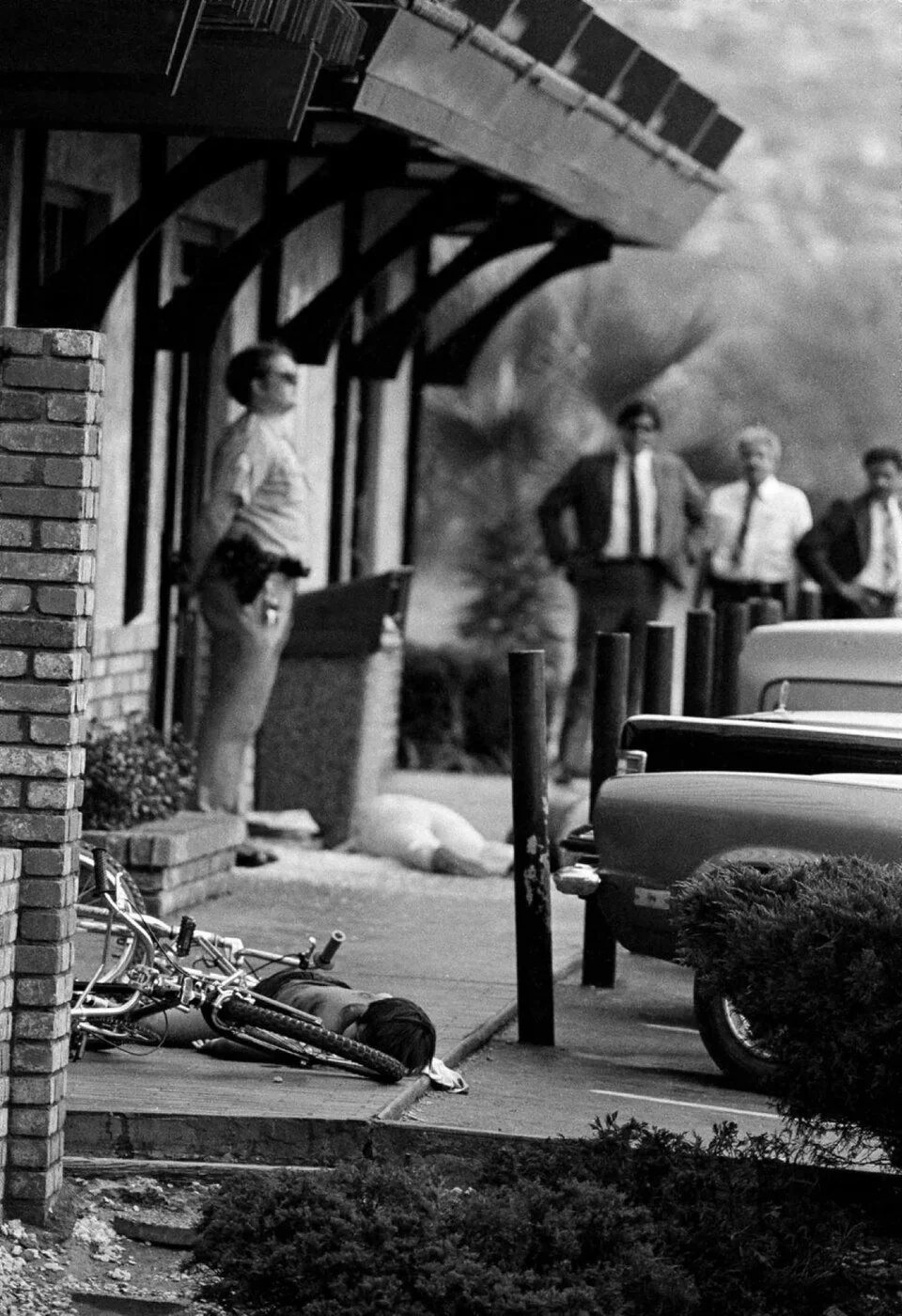
Lenny Ignelzi, Public domain, via Wikimedia Commons