Not Just Art & Nature: An Interview with Newfields President & CEO Le Monte Booker
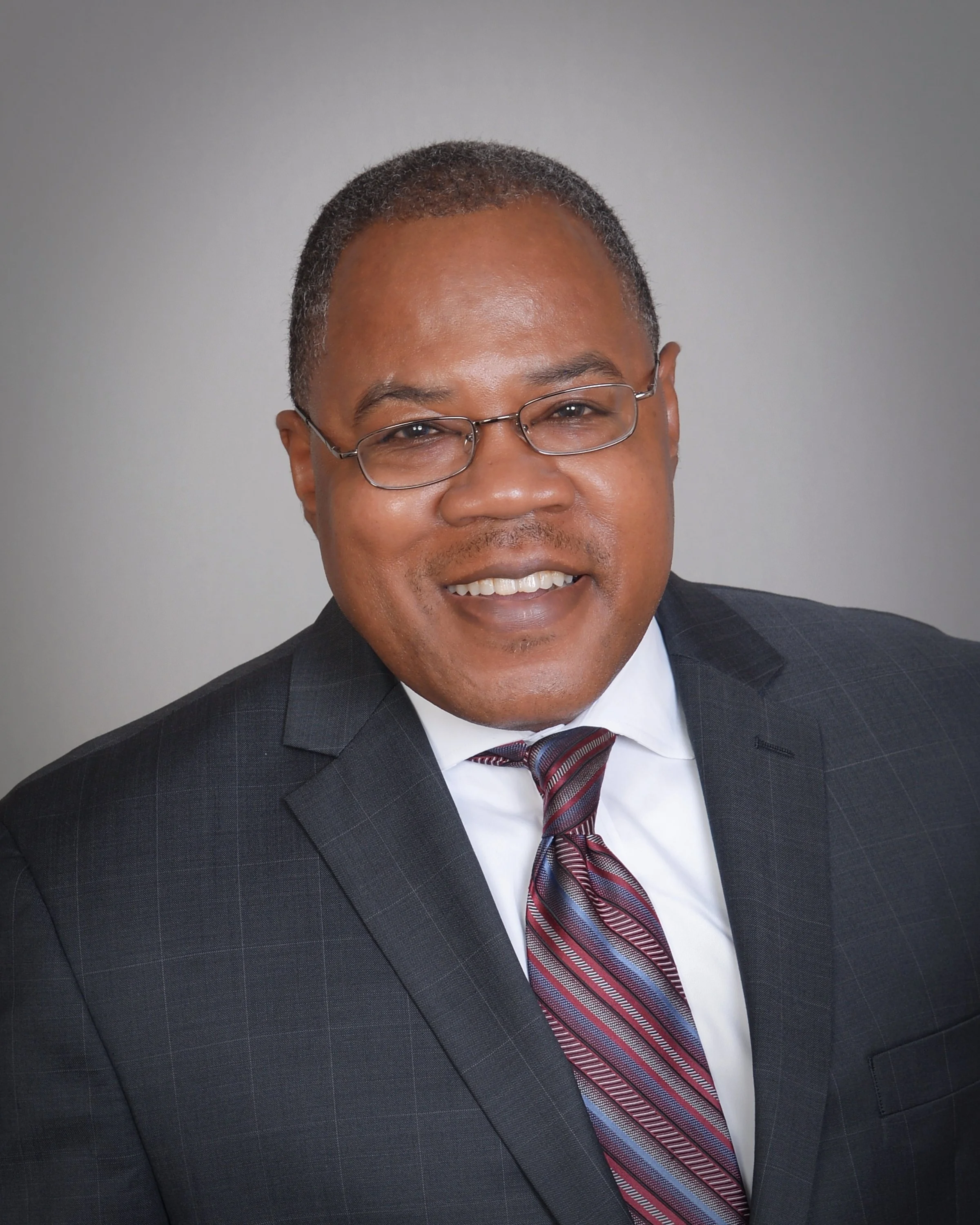
Photo Portrait Courtesy of Newfields
I spent a lot of time recently working on a story for Mirror Indy titled "What's Up with Everything Being a 'Cultural Campus' Now" interviewing Indianapolis nonprofit arts leaders, trying to get past the buzzwords.
I wanted to explore how what's happening on their campuses on a day-to-day basis reflects their missions.
Take Newfields, for example, which currently has on view Giants: Art from the Dean Collection of Swizz Beatz and Alicia Keys.
Both Beatz and Keys unapologetically collect Black art and promote Black artists. Walking through the exhibition, you might recall the Black Lives Matter movement and a set of values increasingly under attack in institutions within reach of the Trump administration, from Harvard to the Smithsonian.
I had these values in mind when I interviewed Le Monte Booker, the president and CEO of Newfields since 2024. On the day I talked to him, August 18, Newfields was still assessing and recovering from damage to its Virginia B. Fairbanks Art & Nature Park, more commonly known as 100 Acres which is closed until further notice.
So that's where I began our conversation, which covered a lot of ground, from his formative years in Chicago to Newfields' new Five-Year Strategic Plan.
This interview has been edited for clarity and length.
DAN GROSSMAN: I wanted to ask you how you're doing after the recent flooding of the White River. [The museum itself is on high ground, but the adjacent 100 Acres Nature Park is in the White River floodplain]
LE MONTE BOOKER: I think that all things considered, I think we're very fortunate. We have had some impact. In particular, parts of our trail have been really significantly impacted, and so we'll have to do some significant repair work to some of our trails, and we've had some of the parking on our lower level that was submerged, but that's starting to clear out. The artwork on the campus fared very well; no damage to the artwork, but just a handful of areas where we've had some submerging underneath water. But things are starting to clear up… I think we'll be fine. The main dealing itself, we fared remarkably well. Just a little bit of leakage in one of our galleries where we have the exhibition bowl [the fourth floor gallery space]. But again, very fortunate that that wasn't significantly worse, and then some damage to our Miller House that's south of us in Columbus, Indiana.
GROSSMAN: Well, getting to this assignment, when my editors gave it to me, they seem to be under the impression that everything's a cultural campus now in Indianapolis. So I'm asking if the term "cultural campus" has entered into artspeak and grantwriting the way maybe placemaking did several years back.. I know the term is on the Newfields website, but is it something you and your staff use on a day-to-day basis? And if not, is there something comparable you use?
BOOKER: No, we do use the term "cultural campus," and you know not not terribly dissimilar from a university campus. You know, it is really meant to highlight all of the many offerings that we have here at Newfields from the IMA to Lilly House. We have just so many things here from Fairbanks Park, our gardens, you know, the amphitheater, dining, retail. It really is a campus, and that's what that work is meant to really allude to... It's a place where you can come and really learn about art history as well as the various species of plants and flowers and bushes that we have here. It's a place where you can come and learn in many different ways. But the term is really meant to send a message to the audience that we are more than just a museum. This is a campus with many, many offerings for different audiences of all backgrounds.
GROSSMAN: As former CFO of the Field Museum in Chicago, can you draw on your experience to maybe talk about that trends of museums becoming more offering more than they used to on their campuses
BOOKER: I think that there are institutions where the use of "cultural campus" probably doesn't work for them because they are much more of a straightforward museum. If you look at the Art Institute in Chicago, you know you're going to have trouble calling the Art Institute a campus. The museum campus in Chicago, that includes the Field Museum, the Shed Aquarium, and Adler Planetarium--that was considered the museum campus. And again, that term campus was used to send a message to the audience that this is a location that's about more than a single museum. It's a location with many offerings that are somewhat distinct and attractive to a much broader audience, and I do believe that it is a way to attract broader audiences that may have very specific interests. It is it is a way to certainly bring in those new and broader audiences.
GROSSMAN: Well, one idea that I've discussed with Jim Walker of Big Car is this: we talked about the idea of avoiding sensory overload and creating inviting spaces for people. Now, The LUME was phased out. Does that decision align with such concerns, or am I reading too much into it?
BOOKER: Well, we are just incredibly proud of the run that we had with The LUME. We saw amazing attendance. We saw a diversity of audience coming in. We're very proud at the courage that it took to try such an attraction, and we believe it was very, very successful. But as you know, for a cultural arts institution and a cultural campus, it is very important that we continue to adjust and shift and make sure that we're listening to our audiences. And what we're hearing from our stakeholders is that Newfields and the IMA need to look more towards contemporary art as an area of specific interest to our audiences. And so we, what we're doing is we're listening. We're listening very closely to what our audiences want. We want to have more contemporary art offerings here in this institution. As you know, the fourth floor is 30,000 square feet, and it offers many opportunities to bring in the types of exhibitions and offerings that our audience has told us that they really want to see more of. And so we see it as a continuing need to evolve and listen and stay extremely relevant to a broad audience, and that brought about the need to transition from what has been a very successful offering, which was alone, to now a much stronger focus on contemporary art.
GROSSMAN: Great, which brings you to Giants: Art from the Dean Collection, right? [Currently on view.]
BOOKER: Yes,. We're so excited to have this exhibition coming to the IMA and Newfields. We think it's not just good for Newfields; it's good for Indianapolis. We're proud to bring this to Indianapolis and what it means for our city. But we're so excited. We're going to have around 122 works of art on display, and in total, about 100 and about 135 objects in total in the exhibition, representing about 37 artists overall, and you know you're going to see some amazing artworks from just just internationally renowned artists such as Kehinde Wiley and Nick Cave and some just amazing amazing artists, and the amount of space that we have, it just really lends itself to a giant exhibition. And so, we're really proud of it. I just finalized layouts of the entire exhibition. We're just really proud of what this means for Indianapolis more than anything.
GROSSMAN: Yeah, I actually got the opportunity to see it at the Museum of Contemporary art San Diego in La Jolla. They have enough space for the exhibition but it seems that you guys will probably do a better job because the fourth floor is so expansive. The idea of the organizers in San Diego was they also had an exhibit of a local artist that was attached to this exhibit. It seemed to be aligned with their mission to outreach to the communities that they exhibit in. Is something similar going to happen at Newfields in coordination with Giants?
BOOKER: Yeah, well, in San Diego, they had "Hometown Heroes."
GROSSMAN: Right. That was what I was referring to.
BOOKER: The exhibition involved the Dean specifically purchasing and acquiring works of art from local artists. We have been in discussions about the possibility of having such an exhibition here. I think you're aware that the Waller Gallery here is very much devoted to this specific idea of actually having exhibitions of art from local artists here in Indianapolis and Indiana. We just had the exhibition called 'The Source' which was a beautiful exhibition.
"Hometown Heroes" is very much similar to what we're doing now, and there are great similarities there. So we'll continue to take a look at this opportunity. I actually got to get out to San Diego as well and see the "Hometown" display there as well as the full exhibition. We'll continue to see if there is an opportunity for that here, but again, we're doing a fine job with the WallerGallery with supporting local artists.of all backgrounds.
GROSSMAN: Shifting gears a little bit, do you think that Newfield's cultural campus extends beyond its 152 acres?
BOOKER: I do. We have the Miller House in Columbus, Indiana, and this is another way we move the offerings, the collections, the exhibitions beyond the walls here, right in Indianapolis. It's a way that we do that, and then also,we lend our art not just locally but around the country to other institutions and and also internationally as well, and when people, whether it's international museums or museums around the country--or here--see works so far from our collection, it just further extends the reach of this concept that we have of a cultural campus that moves beyond these walls, beyond this campus, in in every way, and and also we believe that it just continues to elevate not just Newfields as an institution, but Indianapolis as one of the great cities in the country that we have this here.
GROSSMAN: I know that the current museum literature talks about building "long-term sustainable and meaningful relationships with surrounding communities." And this seems to have expanded from the 2017 Newfields rebrand language. I think of the museum's relationship with the MLK Center and some of the outreach to other communities. Are there some initiatives in terms of outreach to the surrounding neighborhoods that I might not yet be aware of?
BOOKER: We do our best to support as many local institutions as we can, because I don't know if you've had an opportunity to see the high-level summary of our new five-year strategic plan which is on our website. But clearly this is an institution that's focused on art and nature. But what you'll notice in the strategic plan is there's a new elevation, and it's community. Our third major pillar of the institution is community. We want to make sure that we are demonstrating that we're a strong community partner, a very strong community partner, and that means supporting various community institutions. That means being present at their events, providing them with support, integrating our programs with various organizations. Tamika Catchings has been an example of a tremendous partner. She heads up [the Catch the Stars Foundation] It's having those people come in and use our space for their events. It's bringing in IPS school students for their programs, programs with our Wee Wonders program, really allowing young people to get a head start in art and nature, teaching them about the transformative impact of art and nature in their lives. So for us, we pay very close attention. We keep very good records of how we're supporting local organizations and making sure that we're present … Indiana Black Expo, and just making sure that we're very present in these organizations and letting them know how much we truly care.
GROSSMAN: Is this something you've been intimately involved in during your tenure here at the museum?
BOOKER: Yeah. The concept of being of us wanting to deliver Newfields not only art in nature, but also as a very strong community-focused institution. This is something that came forth for me as something that's very important for me, and it is a result of my time living in Chicago, on the west side of Chicago, a very very challenging place to live when I was a kid, with people losing their lives at a very young age through gun violence and drug abuse. And what I recall is, you know, a visit to a museum, MSI [Museum of Science and Industry] at the time, now Griffin Museum of Science and Industry. It changed my life, you know, and so I believe that museums have a transformative impact on people's lives. I know the impact that it had on me, and providing me with an example of what the world looks like outside of a very difficult neighborhood. So I think that we have a responsibility to determine how we can give back, how we can make our community better, and that extends beyond just art and nature. It is literally the ability to talk about how we are a part of how Indianapolis solves problems. How are we contributing to solutions? So yeah, this has been a part of my thinking coming in, and it's based on my background, a West Side Chicago neighborhood, and you know whether it's 100 black men having their people, their young people, come in and listen to me talk and some others talk. You know, these are just ways that we help bring solutions to our community to be a part of solutions.
GROSSMAN: So maybe you consider your campus all of Indianapolis in a way.
BOOKER: Yeah, it is. I view Newfields as an absolutely important part of Indianapolis. That our duty is to contribute to Indianapolis. It is not in any way what Indianapolis can do for us. It's about what we can do for Indianapolis. What is our duty to make Indianapolis a better place? That's what we need to do. And sometimes that means that we're doing things that don't generate income. We're doing it because it's the right thing to do. We're a nonprofit organization, and we need to think a lot about how we are helping Indianapolis to be a wonderful place to live, work, and play.
GROSSMAN: So your vision might contrast just a little bit from the original rebrand in 2017. You think?
BOOKER: Well, I think that my vision is a continuation. It is a continuation, and it isn't. I think visions need to evolve, and I've been here now for a year and 10 months, and you know I come with different experiences. We're never going to lose touch with the core parts of our mission, which is art and nature. But we just have come to a conclusion that you can deliver tremendous art and nature, but if you're not really contributing to your community, especially as a nonprofit or cultural arts institution, there is something profoundly missing in what you're doing. That means making sure that we're attractive to not only people that have been very fortunate economically, but people who don't have great means as well. How do we make sure that they can experience what we have to offer?
GROSSMAN: Finally, I'm wondering if you've seen any evidence of the term cultural campus used to denote terms that have become non-starters, at least as far as grant writing is concerned, such as DEI [Diversity, Equity, and Inclusion]. I've met arts administrators who've told me that their grants from the NEA or what not were refused because their language wasn't appropriate. Are arts administrators, you think, having to develop a new language to talk about diversity in the current political environment?
BOOKER: Yeah, I would agree that it has become necessary to think critically about the language that you use in grants. We went through a period where there was higher scrutiny of any grants that were related to diversity, equity, and inclusion, and we have to adjust. Now we're fortunate in that we don't have a significant amount of federal funding. We're fortunate, but we did have some grants canceled that lean more closely to DEI, and what we have had to do is to just make sure that it is clear that everyone is welcome here at Newfields, regardless of your background. Everyone is welcome here by the nature of the demographics of Indianapolis, by its very nature, we're going to wind up serving demographics that may sway more to one side or the other. By the very nature of our demographics, but yes, we have had to be more thoughtful with the language that we use in grants because there's just some language that's not welcome at this time and so we've had to be thoughtful about that.